
- 6. Etty, E. (2017, 6 January). Wat literaire non-fictie zo literair kan maken [What can make literary non-fiction so literary]. NRC.↩
- 7. De Rosnay, T. (2008). Sarah's Key. London: John Murray.↩
- 8. Howard, A.G. (2013). Splintered. Amulet Books.↩
- 9. Orwell, G. (1945). Animal Farm. Secker & Warburg. Whilst Animal Farm is a work of fiction employing anthropomorphism as a stylistic device, it functions primarily as a political allegory critiquing the Russian Revolution and the corruptive nature of power.↩
- 10. See, for instance, the best-selling volume: Armstrong, L. and Jenkins, S. (2003). Every Second Counts. London: Yellow Jersey Press.↩
- 11. Luyendijk, J. (2015). Swimming with Sharks: My Journey into the World of the Bankers. London: Guardian Faber Publishing.↩
- 12. Compare the application of this style in Frank Westerman's De Graanrepubliek [The Grain Republic] (1999).↩
- 13. Werner Heisenberg, alongside Max Born and Pascual Jordan, was a pioneer of quantum mechanics: a realm of subatomic particles.↩
"I hardly ever read fiction. Between ourselves, I consider it something for bored housewives. Fiction. I read Dan Brown, simply because it was selling in such vast numbers. I thought: let’s see if the masses have any taste."
FIXATING ON FICTIONS
What exactly do we mean by (non-)fiction?
Category: Fictions
| Friday, 8 March 2019Although the boundaries appear to be gradually blurring — writer Frank Westerman would prefer to see them vanish altogether — the world of books still maintains a distinction between fiction and non-fiction. Authors active in both genres are relatively rare. In practice, however, we increasingly see an intermediate form emerging that defies easy classification. It is a genre that the American writer Lee Gutkind once compared to 'jazz', and which Elsbeth Etty, in the NRC, even characterised as a 'mistreated concept'.6 They were referring to literary non-fiction, also known as creative non-fiction, or the evocative English term 'verfabula'.
This article focuses specifically on authors wishing to publish within the non-fiction genre. I shall briefly outline what this entails and how non-fiction relates to its counterparts.
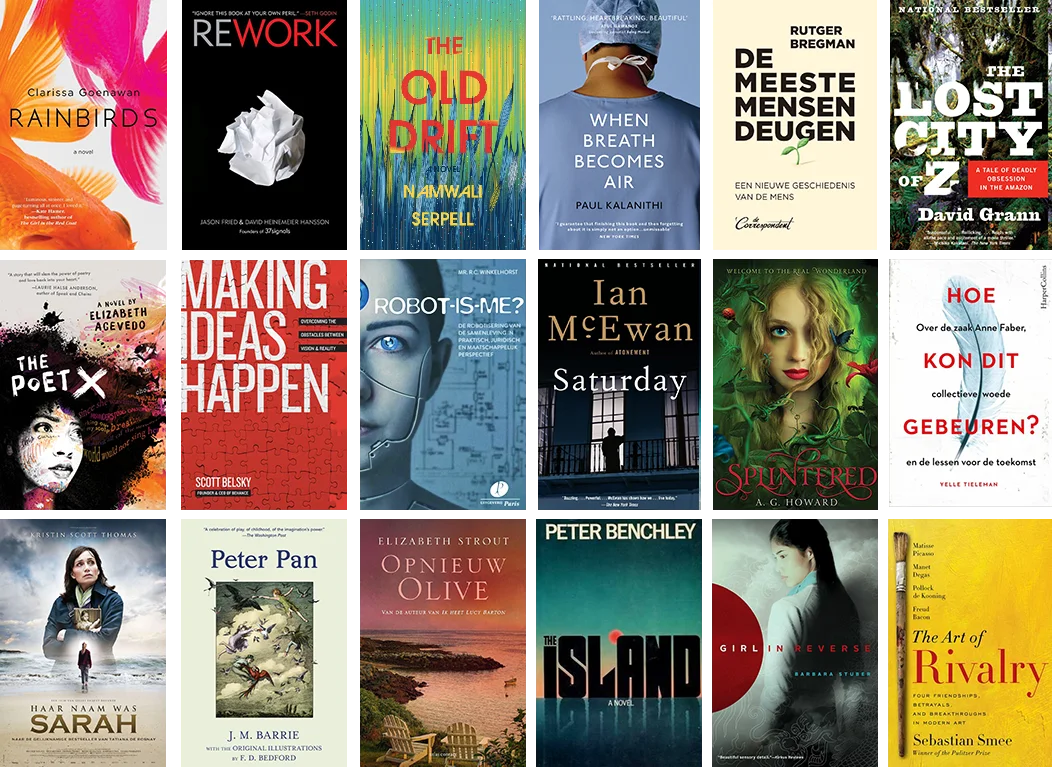
Fiction and non-fiction, fraternally entwined.© Eikvos
Fiction
In this genre, entertainment is the primary objective. Etymologically, 'fiction' is derived from the Latin fictus, meaning feigned or fashioned. And feigning 'something' is precisely what a fiction writer does when describing imaginary events and people. A teller of fairy tales, one might say—or perhaps not?
Well, no; generally speaking, fiction is characterised by a suite of literary qualities that lend the work its value. This value lies in the fact that the narrative aspires to something greater than mere storytelling—for instance, by serving as a commentary on significant social, societal, or political issues. Whilst the characters and their settings are indeed fictional, they may be partially inspired by real life, actual people, and historical events. In this regard, the author possesses far greater creative leeway than a non-fiction writer, as the work is not required to be factually accurate.
For example, the novel Sarah's Key by Tatiana de Rosnay features a fictional protagonist, yet it is inspired by a true raid in France during the Second World War.7 The story also encapsulates deeper social messages, such as the importance of inner peace and self-preservation, but above all, the remembrance of a horrific event about which so little is known.
For the sake of completeness, one might also distinguish between realistic fiction—where events could actually have happened or might one day become reality—and non-realistic fiction, which deals with events that are impossible by earthly standards. Consider, for instance, the fairytale-like Splintered by A.G. Howard, which is inspired by an unparalleled world of fantasy.8 In this genre, the author may even employ anthropomorphism, attributing human qualities, emotions, and intentions to non-human beings. Aside from Splintered, the well-known Animal Farm serves as an excellent example.9
Are non-fiction books, then, entirely true?
Another defining characteristic of the fiction genre is the prose style employed, which differs significantly from that found in non-fiction. In fiction, the emphasis lies heavily on the narrative and character arcs, in which events and the emotional journey of the protagonists are meticulously developed. The fiction author essentially connects and describes the inner growth of the characters in relation to external events. In this process, building and sustaining tension—often until the very end—is of paramount importance. Consequently, many questions raised remain unanswered for considerable periods. This contrasts with non-fiction, where the clear presentation and naming of information and facts take precedence. The representation of these facts is chosen such that answers flow logically from the preceding reasoning or considerations. The fundamental difference, however, lies in the (psychological) characterisation required for fiction and the dialogues frequently used to achieve it. These tools allow the fiction author to colour the plot well beyond the lines of mere factuality.
In summary, fiction encompasses all written works conceived or invented by the author, such as novels, short stories, and poetry.
Non-Fiction
The non-fiction genre is currently enjoying a surge in popularity. Given the abundance of fake news (alternative facts) in the media, there is a greater need for sound, reliable (background) information. But what exactly constitutes the 'non' factor in non-fiction? Unlike the previously discussed genre of fiction, the defining characteristic of non-fiction is that it must concern real people, places, and events. The narratives based upon them must, naturally, be true. Theoretically, this implies that if a non-fiction narrative is later proven to be untrue, it must retrospectively be classified as fiction.
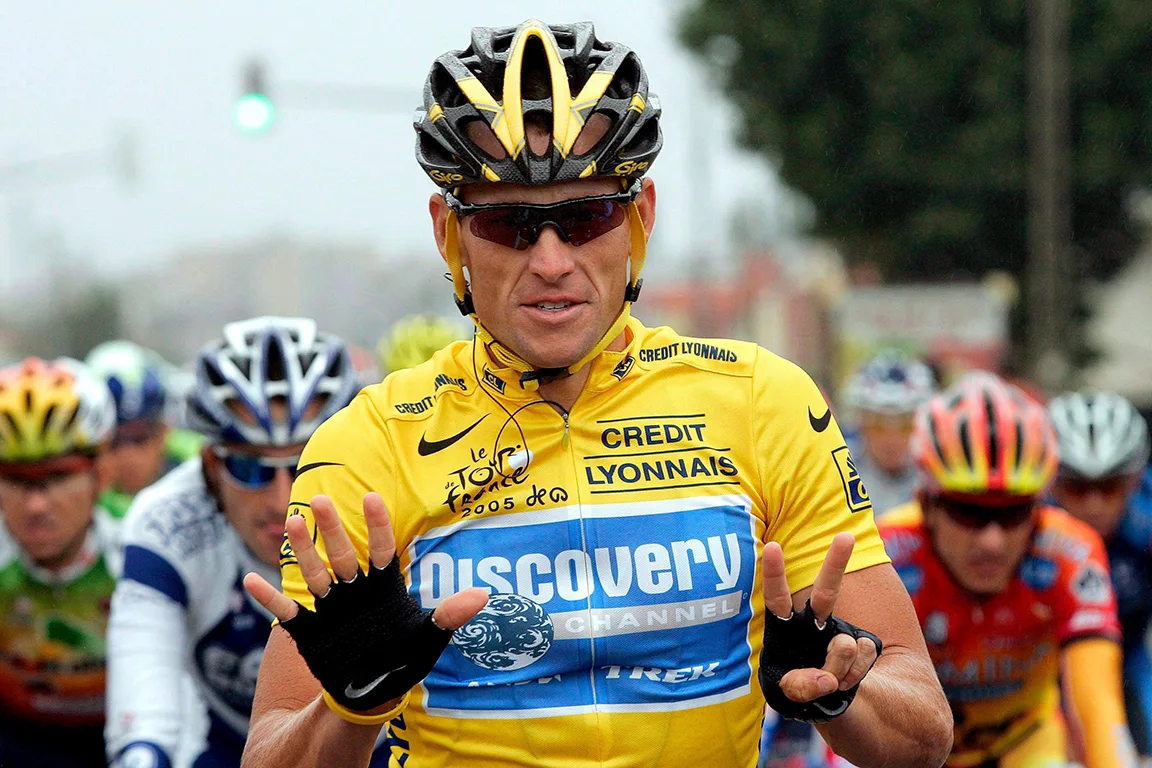
Five plus two equals fiction. Photo: EPA
A striking example can be found in the non-fiction works of seven-time Tour winner, cancer survivor, and author Lance Armstrong.10 In his books, he describes the manner in which he reached the absolute pinnacle of professional cycling. After it became global knowledge in 2012 that Armstrong had utilised a miracle cure to get there, his inspiring narratives abruptly lost their credibility. A librarian at the Manly Library in Australia, however, found an ingenious solution to this awkward predicament. In the reading room, he posted a notice announcing that Armstrong’s non-fiction titles would be relocated to the fiction section. A measure normally reserved solely for the overarching Australian Library and Information Association (ALIA), but that is a side note.
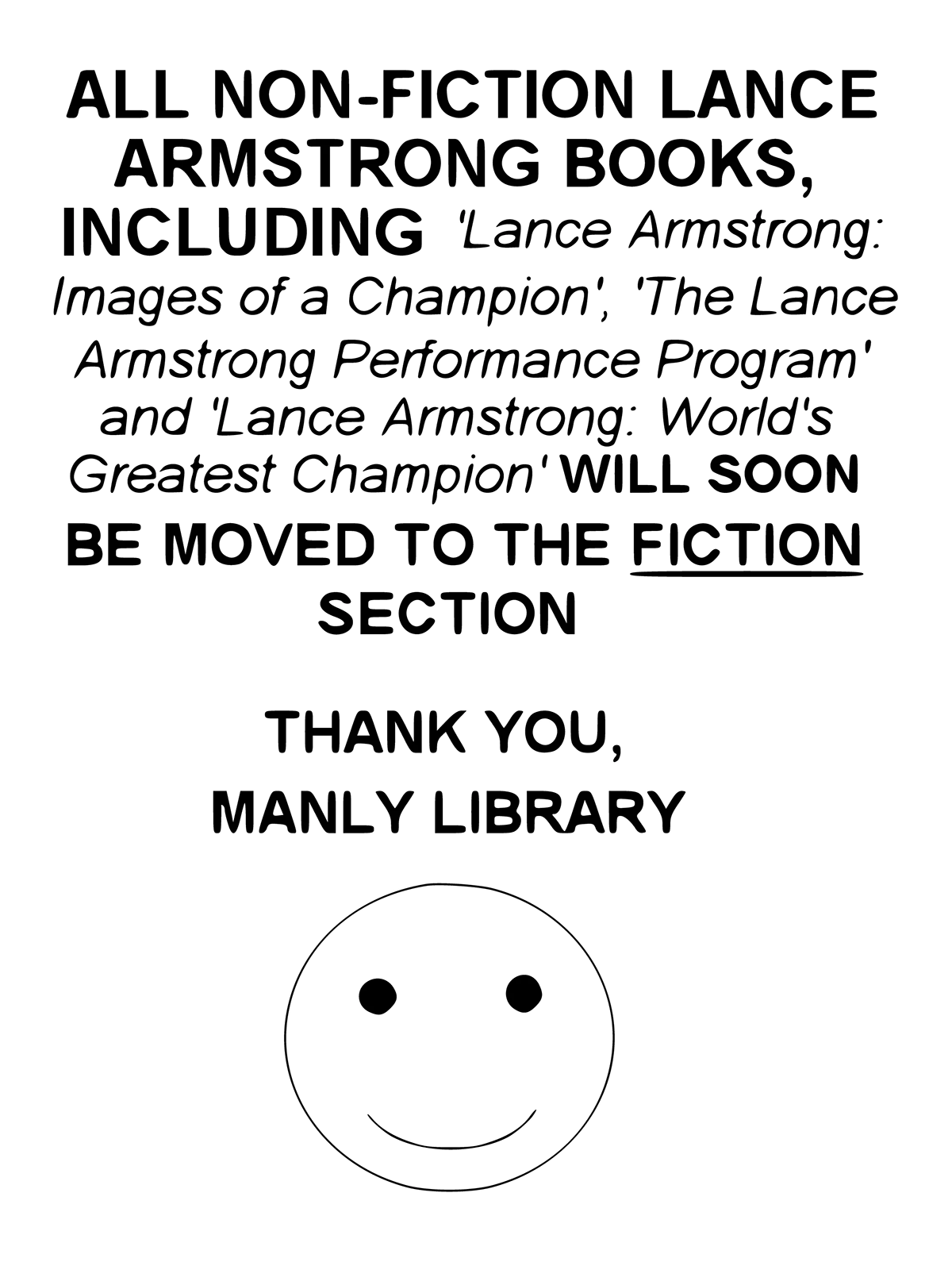
A change of context renders non-fiction a fluid concept.Photo: Manly
Are non-fiction books, then, entirely true? No; non-fiction volumes contain factual information whose authenticity can be demonstrated or verified by others—for instance, through the rigorous use of source citations. Nevertheless, a writer may choose to present certain facts in a specific light, or to select and arrange them in such a way that they align with the intended message. Thus, there remains a degree of freedom that allows for the shaping of image and personal perception. Furthermore, a non-fiction author will seek to express their own experience or (professional) opinion within the work. A well-substantiated opinion may draw very close to the truth, yet it can never, of course, entirely coincide with it. This does not alter the fact that the narrative must be constructed from concrete facts, and the presented concepts must always be grounded in real, realistic situations. One might therefore posit that non-fiction centres on the transmission of information that originates in reality (as perceived by the author).
Typical expressions of non-fiction are found in general informative books, scientific works, textbooks, essays, travel guides, and journals.
Creative Non-Fiction
When we combine the previously discussed genres, we arrive at a genre known as creative or literary non-fiction. 'Creative', because this form of non-fiction reads like a novel with accompanying narrative elements, without violating the underlying facts. The characters, the setting, and the plot must, of course, be genuine rather than imaginary. This particular fusion is where its 'jazz-like' quality resides. And as with any sound non-fiction work, the author diligently provides source citations.
When techniques such as dialogue are applied in creative non-fiction, one might question to what extent the facts are being compromised. To some degree, the author must personally craft the characterisation and the substance of the dialogues. Consequently, this style is less suited to scientific and general informative works. It is predominantly in narrative journalism, historiography, biographies, and travelogues that we encounter this approach.
Another striking element of creative non-fiction is the profound presence of the author themselves within the story. It is frequently their perception or sensitivity—coupled with a specific subject—that palpably shimmers through the work. This form thus affords far greater room for emotion and the writer's personal (and unique) identity. For this reason, this mode of expression is not truly suited to publications within the (objectively) scientific sphere. And that is perfectly fine, for experience is, by definition, subjective.
Frank Westerman and Joris Luyendijk11 serve as prime examples of Dutch writers who successfully employ the literary non-fiction form.12 They appear to find common ground in the conviction that no objective reality exists which is identical for everyone. Indeed, a somewhat subjective hue may lead to a more profound discovery of truth, if only due to the insight-enhancing effect it has upon the reader. But it reaches further than that. Both view literary non-fiction as a response to what they perceive as the limited vision of journalists, suggesting perhaps that the illusion of objective reporting should not be maintained—for to do so would, by definition, be misleading.
Nevertheless, the risk of the Heisenberg effect persists.13 Instead of observing the subject objectively, the author becomes an influential component of it, which perhaps grazes more closely against infotainment than the pursuit of truth.
Beyond the distinction?
As we have seen, the three fictional forms discussed each possess their own place and function within (professional) literature. Freely playing with the existing boundaries between fiction and non-fiction — as illustrated in Table 1 — may cause the traditional dividing line to blur. Opinions on the desirability of this shift remain starkly divided; yet, I believe one fact is inescapable: in non-fiction, the truth is a delicate matter, and anyone who disregards that fact (too) much renders their narrative vain.