- 82.Aikman, Ian (2025, 26 January). Trump says he believes US will 'get Greenland'. BBC.com. See also: Pengelly, Martin (2019, 18 August) Trump confirms he is considering attempt to buy Greenland, The Guardian.↩
- 83. See also: Fagan, Brian (2020). The Little Ice Age: How Climate Made History 1300-1850. Basic Books. Regarding the 'renewed' settlements, see also: Egede Sabije, Hans (1818) Fragments of a diary kept in Greenland during the years 1770-1778 (Trans. Fries G.). Wijbe Wouters. ↩
- 84. Kochi, Sudiksha (2025, 5 March). Greenland Prime Minister Múte Bourup Egede says 'we are not for sale' after Trump's speech. USA Today.↩
- 85. Scherer, Michael (2026, 4 January). Trump Threatens Venezuela’s New Leader With a Fate Worse Than Maduro’s. The Atlantic. ↩
- 86. Sheerin, Jude and Pomeroy, Gabriela. (2026, 7 January). US discussing options to acquire Greenland including using military, White House says. BBC.↩
- 87. Nielsen, Magnus Lund (2025, 28 January) Virtually no Greenlanders want to join the US, new poll finds. Euractiv.↩
- 88. Ciobanu, Claudia and Dazio, Stefanie (2026, 6 January) European leaders push back on Trump's comments about U.S. taking over Greenland. PBS News. Levy, Rachel and Ulmer, Alexandra (2025, 10 April) Like Trump, Silicon Valley wants Greenland, too - for a Big Tech utopia. USA Today.↩
- 89. Reuters, Thomson (2026, 7 January) U.S. Secretary of State Rubio says he will meet with Denmark amid European alarm over Greenland rhetoric. CBC Canada.↩
- 90. Romandash, Anna (2025, 5 June) Minerals for Weapons: Is Ukraine Making a Deal with the United States on Its Own Terms? The Centre for International Governance Innovation (CIGI).↩
- 91. Schifrin, Nick and Barnhart, Eliot (2026, 7 January) White House says U.S. will control Venezuelan oil industry 'indefinitely'. PBS News. The designation 'Greenland deal' is a nod to The European Green Deal, COM(2019) 640, which aims for climate neutrality by 2050—a goal for which Trump appears to harbour little affinity.↩
- 92. See also: Haley, James A. (2025, 19 March) On Giving Trump What Trump Wants. CIGI.↩
- 93. Zengerle, Patricia (2026, 7 January) US senators foresee vote on reining Trump in over Greenland. Reuters. Zengerle, Patricia (2026, 8 January) US Senate advances measure curbing Trump's Venezuela war powers. Reuters.↩
“The balance of power is the scale of peace."
LAND-GRABBING
Greenland
Category: Current Affairs
| Tuesday, 23 December 2025 (updated 8-1-’26)Polar bears from Greenland are spotted with some regularity within the rustic confines of Iceland. Powerful currents transport these ursine voyagers upon drifting ice floes across the North Atlantic to their destination. These bears, often severely emaciated, are far from welcome—a sentiment that is hardly surprising. In such a state, they pose not only a visceral hazard to the local populace but also a significant financial burden in terms of relocation costs. Fortuitously for the bears, Iceland has thus far remained devoid of a U.S. Immigration and Customs Enforcement (ICE) presence.
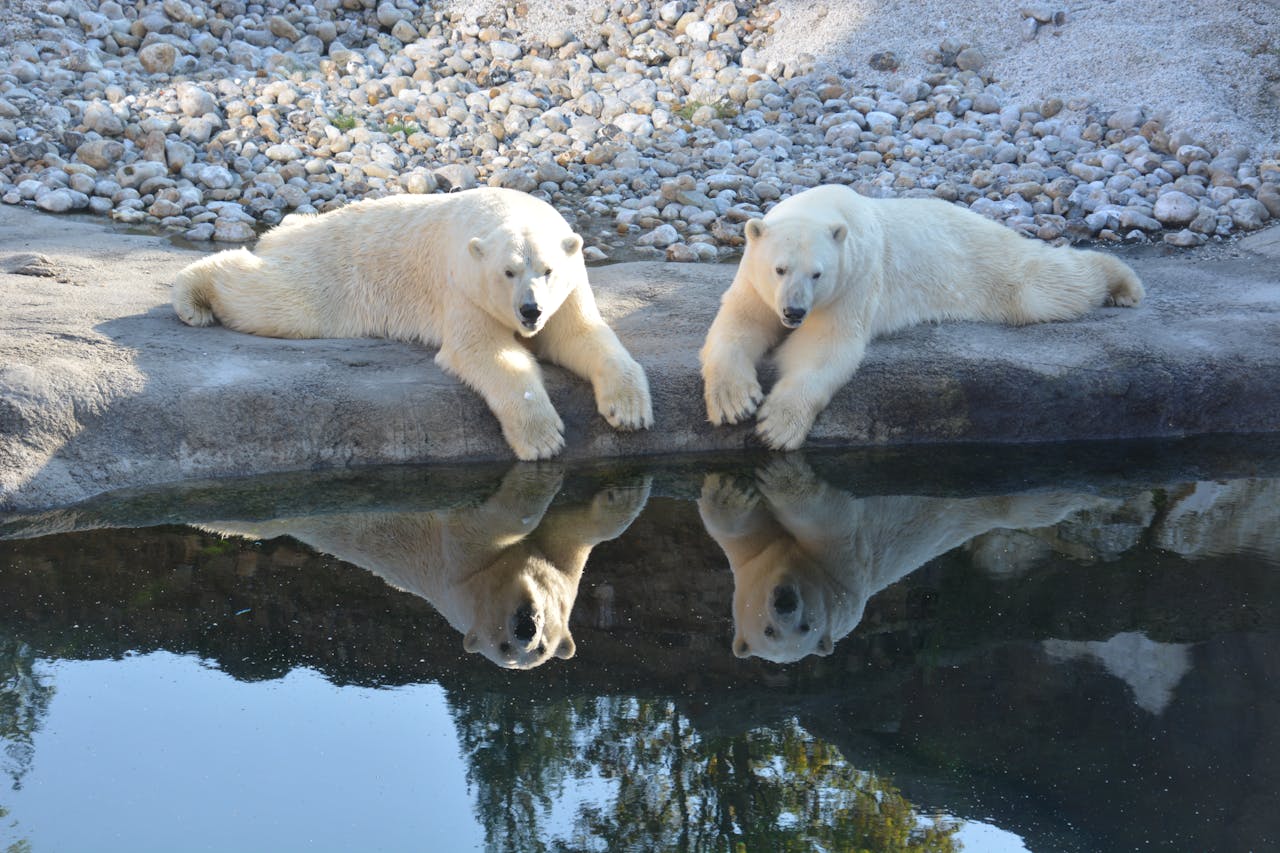
Polar bears in exile or collective reflection?Photo: Stef
The destiny of Greenland itself, however, may be poised for a dramatic shift. Now that the second Trump administration has mooted the annexation of Greenland into the United States, these polar bears may soon find themselves accompanied upon their odyssey.82
The Verdant Deception
Greenland currently commands the global spotlight, though not on account of its pristine wilderness. That landscape, with the singular exception of the Qinngua Valley, is anything but green. The nomenclature was conceived around 1000 AD by Erik the Red, progenitor of the first Norse settlement. The chronicle of Erik the Red bears a curious resemblance to the founding of the penal colony in Sydney, Australia. Erik arrived in Greenland following his banishment from Norway; he christened the territory 'Greenland' in the hope that such a designation would entice colonists—a marketing strategy that proved remarkably efficacious. Settlers arrived primarily from Iceland, which at the time suffered from considerable overpopulation. Consequently, Greenland became the final Scandinavian Viking outpost on the North American continent. Ultimately, the Little Ice Age, which endured until the 19th century, rendered life in the settlement unsustainable from the 15th century onwards.83
"We do need Greenland, absolutely. We need it for defense.”
In the contemporary era, Greenland, with its approximately 55,000 inhabitants, ranks amongst the most sparsely populated nations on earth and remains, despite a substantial degree of autonomy, a constituent part of the Kingdom of Denmark. Nevertheless, Greenland retains its polar climate, where temperatures peaking at 10 degrees Celsius are considered warm. This climatic reality has not deterred the United States' ambitions to acquire the island—a prospect that the Danish and Greenlandic Prime Ministers, Mette Frederiksen and Múte Bourup Egede, view with profound distaste. According to Egede, the territory is categorically not for sale.84
Trump maintains a contrary perspective. 'We do need Greenland, absolutely. We need it for defense,' he recently reiterated in an interview with The Atlantic.85 These words gained additional gravitas as the interview transpired on the 4th of January, mere hours following the U.S. abduction of Nicolás Maduro, the President of Venezuela. Frederiksen responded in increasingly sharp terms, entreating Trump to cease his 'prognostications of threat'. To little avail; Trump promptly indicated that military intervention remained an option, thereby escalating the matter into a NATO crisis.86 With the alliance suddenly under duress, the question remains whether such a cost is acceptable to America—or, indeed, to Europe.
And what of the Greenlanders themselves? Over the past seven years, the proportion of the populace favouring independence from Denmark has surged to 84%. For many, the prerequisite for such a move is a significantly improved standard of living. However, 85% of Greenlanders have no desire to sever ties with Denmark merely to become a constituent of the United States.87
The (51st) State of the Union
Trump contends that Greenland is encircled by Chinese and Russian vessels, presenting an escalating security risk to the United States—a challenge he claims Denmark is ill-equipped to manage. Vice President Vance went so far as to accuse Denmark of negligence in its protection of Greenland.88 These assertions have been met with considerable scepticism, appearing inconsistent with the factual maritime traffic patterns surrounding the island.89 What, then, is the true nature of this geopolitical gambit?
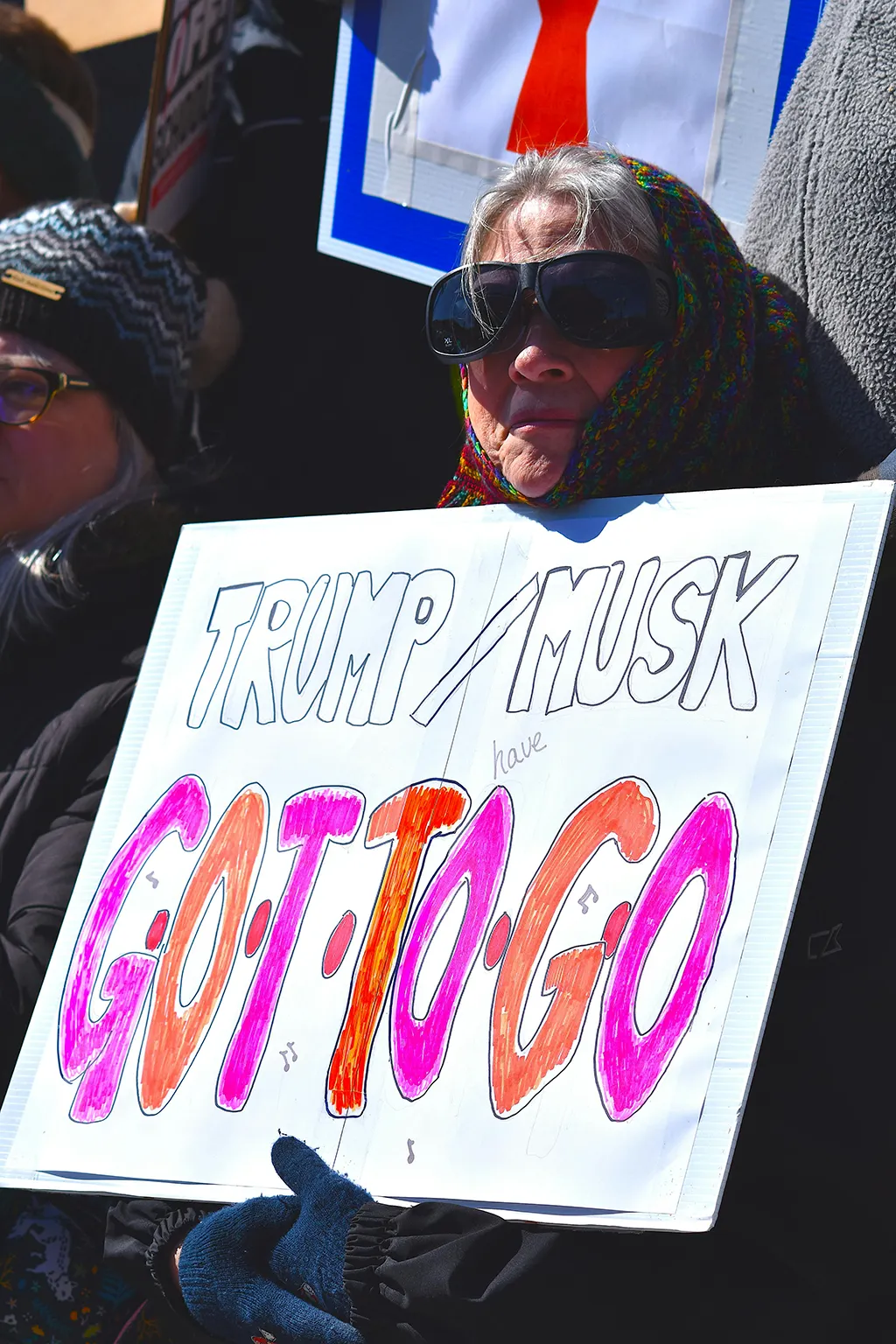
Make America Great Again?Photo: Charles Criscuolo
A potential sale of Greenland is by no means a historical anomaly; on paper, the rationale has remained virtually unchanged for nearly two centuries. Following the 1867 acquisition of Alaska from the Russian Empire, then Secretary of State William Seward posited that the simultaneous purchase of Greenland and Iceland would be a judicious endeavour. However, a formal bid failed to materialise at that time. Such an offer did emerge in 1946, in the immediate aftermath of the Second World War, when President Truman offered Denmark 100 million dollars in gold for the island. The bid was striking, given that Denmark and the U.S. had agreed—in 1916—upon the sale of the Danish West Indies on the condition that the U.S. would renounce any future claims to North Greenland. Unlike the current rhetoric, national security was indeed the primary catalyst for interest then, spurred by the dawn of the Cold War. It rendered Greenland a coveted buffer between the American mainland and the erstwhile Soviet Union.
A kind of Las Vegas 2.0, complete with a rocket launch site for Musk.
The intent of Trump—who is eager to be enshrined in the annals of history as a president of peace—presently appears to take the form of a forced expropriation. In this ambition, he does not stand alone; Big Tech also harbours designs for Greenland, envisioning the establishment of charter cities with minimal regulatory oversight for their AI hubs. Essentially a Las Vegas 2.0, complete with a rocket launch site for Musk. These schemes align seamlessly with the now unbridled rapacity of the tech sector. It is this particular nuance that leaves a lingering aftertaste; the entire saga reeks of a nascent form of colonialism.
The Green Deal, Reimagined
Greenland’s paramount significance, however, resides in the climate. Given the velocity of global warming, this vast island is poised to emerge as one of the more hospitable environments for human habitation. Combined with the wealth of rare-earth minerals—the extraction of which is facilitated by climate change—Greenland is being transformed into a veritable 'white pearl'. With the 'mineral deal' between the U.S. and Ukraine (May 2025) already secured, and Venezuela’s oil reserves 'in the bag' following the seizure of Nicolás Maduro in January 2026, the time seems ripe for the Greenland transaction. The question remains whether Trump feels sufficiently emboldened to employ the pretext of national security as an icebreaker. For the past eighty years, the United States has largely functioned as a stabilising force for its partners. That certainty now appears to have evaporated. Externally, the EU, as a strategic NATO partner, could now draw a definitive line. Internally, perhaps only the Senate can yet turn the tide.
As for Trump? On the 7th of January 2026, he signed a memorandum directing the U.S. to withdraw from dozens of international organisations, including many dedicated to the mitigation of climate change, such as the UNFCCC and the IPCC.