


- 49. Snow White (and the Seven Dwarfs) originates from the compendium Kinder- und Hausmärchen, where the narrative is catalogued as KHM53 (Sneewittchen). This seven-volume series, published between 1812 and 1857, was conceived by the German Brothers Grimm.↩
- 50. Barrie, J. M. (2014). Peter Pan. Puffin.↩
- 51. Retropolis, (2020, July 3). A brief history of the word ‘redskin’ and how it became a source of controversy: Its origins extend back to the 18th century, long before it became the name of a football team. Washington Post.↩
- 52. Mann, C. (2005). 1491; New Revelations of the Americas Before Columbus. Penguin Random House.↩
- 53. White, R. (1991). The Middle Ground: Indians, Empires, and Republics in the Great Lakes Region, 1650-1815. Cambridge University Press.↩
- 54. Tremaine J. & Dowd, K. (2021, updated: May 1). Disneyland's new Snow White ride adds magic, but also a new problem. SFGate.↩
- 55. A Kind Drone, BUMA, 2017. The website (kawagoshikazunori.com) by Kazunori Kawagoshi is no longer active; the link has been substituted with an original image.↩
“Nothing piques curiosity quite like censorship”
CENSORSHIP AS A MODE OF ATTENTION
ZENZORSHIP
Category: Current Affairs
| Friday, 17 July 2021On the 9th of February, Disney's animated short OUT, directed by Steven Hunter (renowned for his work on Finding Nemo), garnered an Academy Award nomination. Out chronicles the tribulations of a young man poised to disclose his homosexuality to his parents. Whilst the Oscar remained elusive, OUT nonetheless secured a prestigious accolade: in April, it was bestowed with the special recognition award at the 32nd GLAAD Media Awards—an authoritative and pro-LGBT forum convened annually in New York.
The GLAAD laurels, however, bear a distinct caveat: the victors should expect no felicitations from Russia. The Russian media regulator Roskomnadzor deemed an official reprimand to Disney a more pertinent response. According to the agency, the film sits in direct tension with Russian statutes prohibiting 'propaganda' of non-traditional sexual values. Through this interdiction, Russia seeks to prevent its youth from being swayed by the ideological vistas of literature and cinema featuring homosexual protagonists. Consequently, OUT is fated to remain absent from the Russian media landscape.
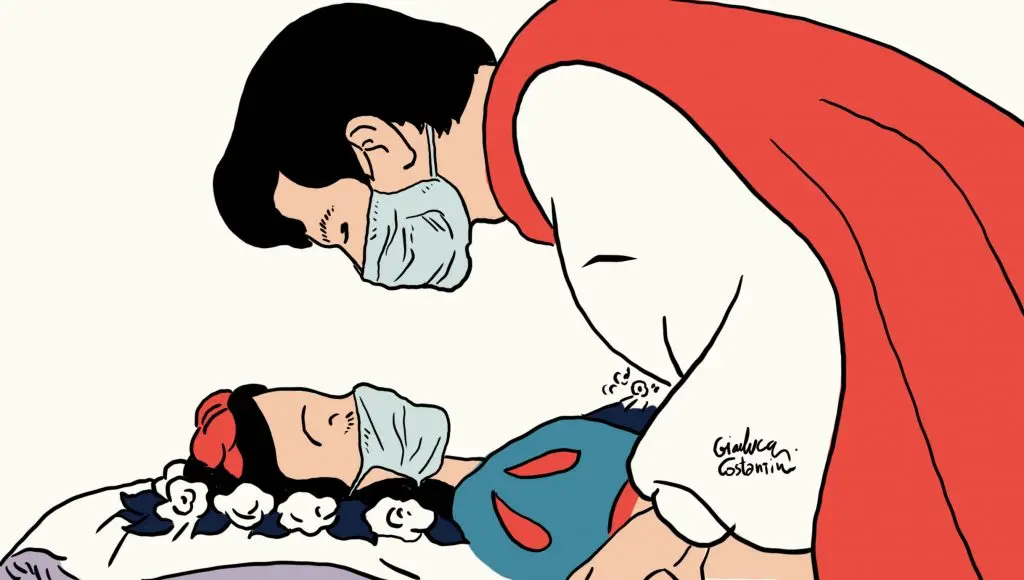
Disney and censorship: a paradox of our age.G. Costantin
Those who would reflexively consign such censorship to Russian or Asian spheres of influence shall find their assumptions swiftly dismantled. Censorship is a hydra-headed and geographically indeterminate behemoth. The cinematic legacy of *Snow White and the Seven Dwarfs*—which, tellingly, never faced suppression in Russia—serves as a poignant case in point.
Disney's Precarious Equilibrium
Following a hiatus of over 400 days, Disneyland California finally reopened its gates this May. Drawing inspiration from the 1937 animated masterpiece, the park unveiled its latest attraction: 'Snow White's Enchanted Wish'. An ethereal longing that culminates in that most storied of kisses. Whilst this fragment of magical romanticism offers a fleeting reprieve from the exigencies of daily existence, the spectre of censorship lurks once more upon the horizon.
Where the original film became a subject of contention in 2018—joining the ranks of numerous Disney productions under modern scrutiny—it was now the turn of the physical attraction. The princely kiss that restores Snow White to the realm of the living has been decried by certain MeToo activists as non-consensual, allegedly fostering a rape culture. In their estimation, such an attraction is an intolerable anachronism in the year 2021.
An unclouded viewing of the film reveals a narrative of two lovers. Snow White explicitly sings: "I'm wishing—for the one I love to find me today." Yet, when the malevolent stepmother consigns her to the sleep of death, the Prince is left with naught but a final kiss of farewell. How the Prince might have solicited consent in such a state is an inquiry conspicuously absent from a discourse where context is relegated to a minor, subservient role. Consider also the stepmother who, pursued by seven dwarfs, falls to her demise from a jagged precipice. To date, no digital activist group has emerged to champion her cause.
Fortunately, such advocacy is unnecessary; Snow White is primarily a classical fairy tale rather than a contemporary code of conduct.49 That takes nothing away from the fact that in new cinematic and literary renditions, the tender kiss is increasingly and ruthlessly excised. This appears to be a manifestation of hyper-performative political correctness within an attention economy, where sensation-driven controversies habitually triumph over common sense.
For Disney Studios, this represents a burgeoning crisis. Scarcely any classic Disney fable remains immune to criticism regarding outmoded sensibilities or stereotypical characterisations. Among these is Peter Pan (also published as Peter and Wendy), the tale of a magical youth who refuses to enter the horizon of adulthood.50 Prior to its 1953 cinematic debut, the narrative existed as a 1904 stage play by J.M. Barrie, who subsequently authored the 1911 novel.
In Peter Pan, the term Redskins appears, though notably devoid of pejorative intent within the text's original internal logic. Presently, however, the term evokes significant sensitivities in America (particularly among major corporate sponsors).51 The celebrated Washington Redskins football team, for instance, underwent a nomenclature change for this very reason. Curiously, Native Americans themselves—much like the majority of the American populace—appear to harbour little grievance regarding the designation.
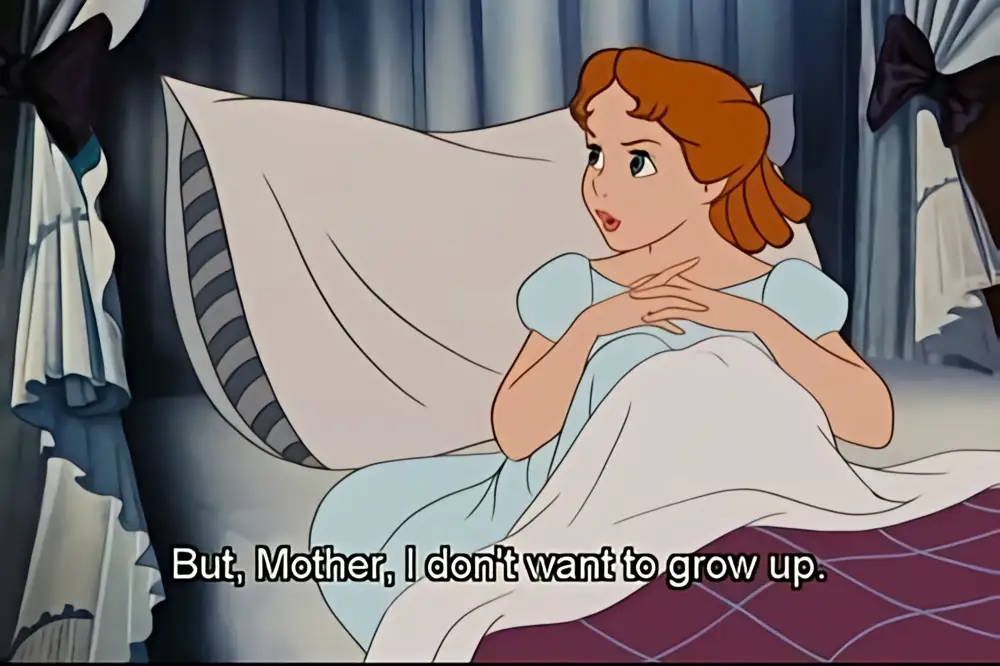
Peter Pan's Wendy Darling was inspired by Margaret Henley (1888-1894).Disney
The primary critique levelled at Peter Pan posits that it portrays the indigenous peoples of America through a stereotypical lens, failing to reflect the diversity and authentic cultural traditions of the tribes. To interrogate this claim, one must consider the intended purpose of the Neverland setting. Unmistakably, the aim was to construct an island where the vast horizons of childhood fantasy were rendered tangible—often distilled into the imaginative play of children 'acting out' pirates or Indians. Furthermore, Neverland served a more profound teleological function: through the island’s fluid morality, Barrie cultivated a stark juxtaposition with the late-Victorian English middle class—a stratum whose pervasive conservatism and rigid decorum were increasingly perceived as stifling.
The fictional space thus created does not purport to be a faithful mimesis of the Native American community, but rather a fantastical escape from British reality. It is an island where pirates, mermaids, children, and the Piccaninny tribe constitute the primary denizens. The author sought, above all, the resonance of contrasts—a pursuit that cannot be decoupled from the fact that Peter Pan was originally conceived for the stage. In theatrical production, the imperative is to project an image that conveys the essence of a particular reality. This touches deeply upon symbolism, which, in turn, often transitions seamlessly into characterisation or stereotyping. I shall demonstrate this through several pertinent examples.
Stereotypes
During a performance, the spectator is inundated with a profusion of information that must be processed with celerity. A stereotype assists the viewer in grasping the underlying message more readily. For instance, a king’s crown symbolises temporal power, underscoring his station and gravitas. Kings are also traditionally assigned certain proclivities—depicted as materialistic, bellicose, or perhaps overly amorous. Such shorthand ensures that the audience can swiftly orient themselves within the character’s persona.
Confusion arises when—within an animated theatrical piece—a submissive monarch ascends the stage sans crown. The result is semiotic interference, delaying the viewer’s ability to assemble the narrative fragments. A comparable phenomenon is observed in animation. Unlike the expansive vistas of a novel, cinema does not always afford the luxury of time to exhaustively develop a character’s interiority. A sequence featuring a police cruiser surging into a street, followed by a dour man fleeing in a monochrome striped suit, immediately informs the viewer of the situation. Naturally, not all miscreants possess a sullen countenance, let alone don striped attire, yet for the viewer, the shorthand is efficacious. Should one exaggerate this stereotyping, a caricature emerges—akin to the doughty officer who very nearly buckles under the pinned weight of his various accolades.
Fairy tales are increasingly scrutinised as non-fiction, and imaginative breadth is supplanted by literalist interpretations. In this climate, fantasy is compelled to justify itself before a projected and normalised reality.
Characterisation is equally prevalent in contemporary cinema. A recent, widely lauded example is Borat Subsequent Moviefilm (portrayed by Sacha Baron Cohen). A more profound stereotype of Kazakhstan and Eastern European culture than Borat scarcely exists. Kazakhs are depicted as racist, sexist, and primitive. Whilst many find this humorous, those unable to look beyond the surface—who fail to recognise the satirical intent—will find the film an unmitigated affront. Yet, when assessing the total effect, Borat 2 is a work that interrogates not Kazakh culture, but rather the hypocrisy of American exceptionalism.
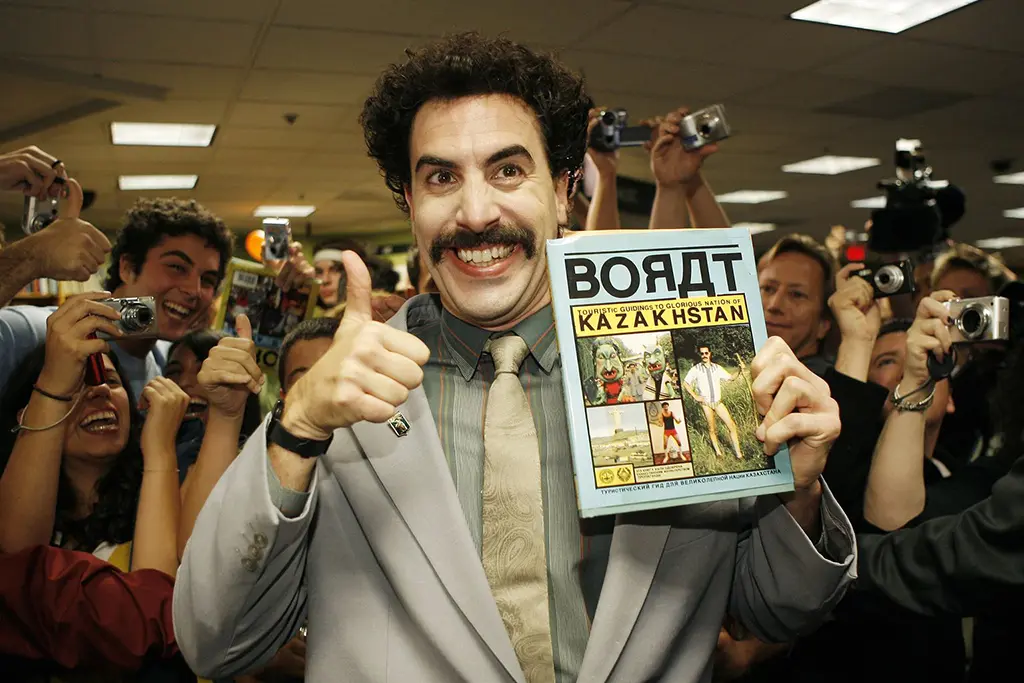
Borat as the saviour of Kazakhstan.Photo: Amazon Prime
A degree of stereotyping is therefore requisite to achieve a balance between form and content. The categorisation inherent in such characterisation is functional to the performance; it serves to simplify and systematise information, ensuring the drama resonates with the audience’s lived experience. For it must be clear: all personas in Neverland align with the imagination of children, and the stereotypes children employ to navigate that world.
James Barrie was intimately acquainted with that world. He modelled many pivotal characters after the children of his friends and associates. Wendy Darling, for instance, was inspired by the tragically short-lived Margaret Henley, for whom Barrie held a deep affection. Certain passages featuring 'peculiar' English were likewise drawn from these real-world interactions. However, this does not imply a lack of plasticity. Given the resources and zeitgeist of the present day, Barrie might well have navigated these vistas differently. London's Great Ormond Street Hospital, the recipient of Barrie's copyrights, provides filmmakers with the necessary latitude to respect contemporary sensitivities in new productions—without, naturally, compromising the narrative essence.
If we focus purely on the thematic essence, the central motif in Peter Pan is the choice between perpetual childhood and the assumption of responsibility; as the narrative gains gravitas, it poses the question of whether love outweighs one's fidelity to their roots. The experience of death is also a recurring element. Marginalisation or oppression, however, are not themes within Peter Pan. It is, first and foremost, a children’s fable, and Neverland a fictional island within the vista of a child's mind. Nonetheless, a young adult might perceive it as an invitation to a profound exploration of Native American culture. Exemplary non-fiction works have been authored on this subject, such as The Middle Ground by Richard White52 or 1491 by Charles Mann.53 The world depicted therein stands in stark contrast to the fragmented America of today.
For Disney, unwilling to see its historical oeuvre vanish into the shredder, the situation remains remarkably complex. To accept literature and the classics for what they are appears increasingly difficult for some. Fairy tales are scrutinised as though they were non-fiction, and imaginative breadth is supplanted by literalist interpretations. In this climate, fantasy is compelled to justify itself before a projected and normalised reality—precisely the domain where fantasy does not belong, and where it ceases to be boundless. Yet, I do not anticipate that Snow White's Enchanted Wish will find itself at the bottom of a wishing well anytime soon. This is due entirely to an emerging opportunistic phenomenon in the realm of censorship.
Censorship as a Mode of Attention: Zenzorship
Certain aspects of these developments could be designated by the term zenzorship—a contemporary, novel manifestation of the craft. Traditionally, one associates censorship with the state-sanctioned suppression of information, as seen with OUT. However, corporations, interest groups, or even individuals are increasingly capable of exerting or enforcing such restrictions. In these instances, the objective is often not to suppress social progress or dissenting opinions, but rather to generate attention for oneself. This is a fundamental distinction. The creative expression that should serve as a medium for enlightenment [zen] is publicly magnified and criminalised [zuur/sour] for the sake of a barely coherent self-interest.
In the case of *Snow White*, it was Fox News that took a balanced review of the new attraction in SFGate magazine and polarised and inflated it into global news. Suggestive headlines such as "Cancel culture targets Snow White" and "Snow White ride slammed as not 'woke' enough" were employed as 'triggers'.
In the original *SFGate* article54, the authors describe the aesthetic beauty of the attraction while offering a critical note on the kiss scene:
"A kiss he gives to her without her consent, while she's asleep, which cannot possibly be true love if only one person knows it's happening," and, "Haven’t we already agreed that consent in early Disney movies is a major issue? That teaching kids that kissing, when it hasn't been established if both parties are willing to engage, is not OK?"
An observation that would ordinarily have been noted in passing was elevated by Fox News to lead-story status fourteen times. Suddenly, 'dating experts', relationship coaches, and 'concerned mothers' emerged, seeking publicity for their own freelance ventures. With no small degree of theatricality, they demanded the censorship of Disney on national television. The social media echo chamber, bolstered by the usual activist groups, did the rest. Proponents and opponents alike, desperate for visibility, vied for attention, and a censorship controversy was born. Naturally, this was to the great satisfaction of Fox News, which had seen its ratings diminish significantly following the inauguration of the more introverted President Biden.
The situation made it patently clear that censorship, or the threat thereof, can be a highly opportunistic instrument. As ever, the core issues were attention and capital, but at what cost? Through this form of news-making—in which an opinion was magnified into a looming assault on cherished values—Fox News cultivated an atmosphere of dread and suspicion. It is a proven methodology through which Donald Trump also frequently commanded the absolute centre of attention.
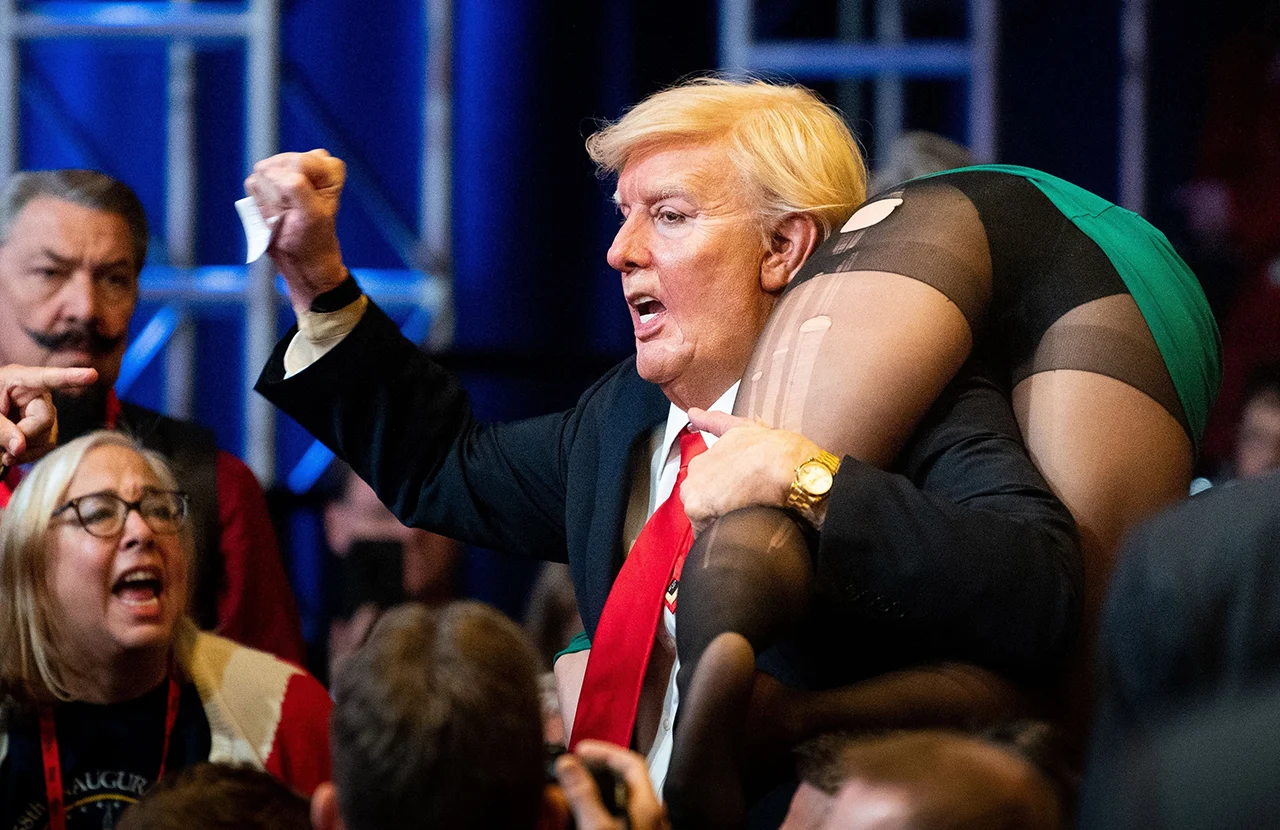
Characterisation or simply the staggering reality?Photo: Rex Features
In such a defensive setting, any semblance of reasonable dialogue falters and polarities only intensify. For subjects such as equal rights, racism, and diversity, this is far from welcome news. These matters are of profound weight and do not lend themselves to exploitation through clickbait or zenzorship. Women who earnestly advocate for bodily integrity are done a disservice when attention-seekers co-opt the subject to demand a ban on a fairy-tale kiss. Such ridicule erodes the foundational support for #MeToo and the original ethos of Woke. Gradually, these hashtags dissolve into a morass of performative outrage, while genuine problems sink passively into the quicksand. The adjacent open sewer of the sensationalist press reeks no less for it; after all, a feigned flatulence is guaranteed a laugh.
A kindred malaise has been experienced by the creative sector in recent months. It is being sensitised, censored, and re-educated by self-appointed moralists who have traded reading comprehension for a unilateral, authoritarian religiosity.
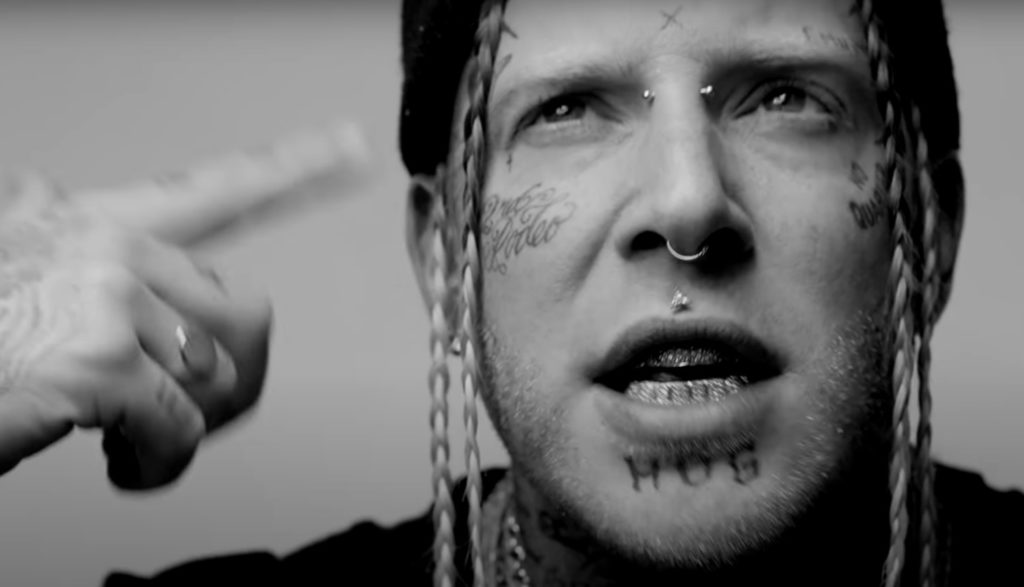
Tom MacDonald, Fake Woke (2021). Genre Rap/Hip-Hop.Label: Tom Macdonald
But what is a development without its counterpoint? This currently emerges from the world of music—a genre that has hitherto remained overlooked in this context. In the immensely popular album *Fake Woke* (2021) by rapper Tom MacDonald, we find a blistering indictment of cancel culture and the mainstream media. In the eponymous track, MacDonald articulates his concerns regarding society’s compulsion for labelling—a world in which, he posits, feelings have come to utterly dominate facts. MacDonald perceives the smartphone as the new slave chain; whilst no cage is visible, our worldview is strictly circumscribed by the screen. In Fake Woke, he takes a resolute stand, rapping with conviction:
Censorship’s an issue ‘cause they choose what they erase / There’s a difference between hate speech and speech that you hate.
Tchaikovsky Unplugged
Fortunately, the new 'zenzorship' also possesses a more mellifluous form, which brings us once more to Russia. Several years ago, at the Bolshoi Theatre in Moscow, I witnessed a performance of Tchaikovsky’s *Swan Lake*. At the time, my knowledge of ballet was rudimentary, yet the atmosphere was profoundly moving, prompting a desire for deeper enquiry.
*Swan Lake* recounts the tale of Prince Siegfried and Odette, who, cursed by the sorcerer Von Rothbart, is condemned to live as a white swan, reclaiming her human form only by night. Siegfried experiences this firsthand during a chance encounter by the lakeside. Determined to break the enchantment, he seeks the intervention of true love. Naturally, Von Rothbart endeavours to thwart this affection, and from that moment, a captivating spectacle unfolds. Ballet proves to be an exceptionally potent medium for such a narrative.
An observation likely shared by certain Japanese creative minds; for while the Swan Lake ballet is globally renowned, the brand BUYMA was, until recently, far less so.
When the apparel titan BUYMA (an acronym for Buying Market) sought to enter the global marketplace, it faced a seemingly insurmountable challenge. How does an obscure brand distinguish itself in an ocean of international competitors? One need only consider the myriad retailers such as ASOS, Zalando, and Zara, to name but a few.
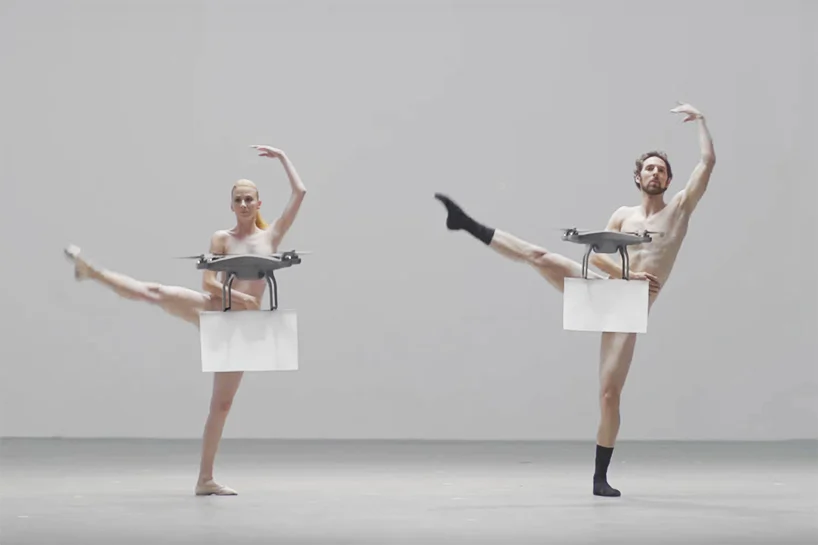
Clever censorship in Tchaikovsky's Swan Lake. Photo: BUYMA
Paradoxically, the creative resolution lay in zenzorship. In a commercial that pointedly features no clothing, two ballet dancers, clad only in their birthday suits, perform a 'censored' rendition of Swan Lake. The moderation is orchestrated by several hovering drones that meticulously shield their torsos. Or so it is intended. Modern technology, however, struggles to keep pace with the kinetic dynamism of the dancers; as the velocity intensifies, more drones join the fray. Each is programmed to ensure that 'nothing' inadvertently escapes this choreographed censorship. For the spectator struggling to comprehend this escalating interdiction, a subtle message soon appears: '服を購入'—or, 'buy clothes'.55
A veiled counsel which, given BUYMA’s current market position, many have taken to heart. Zenzorship as a mode of attention is thus effective—a truth likely grasped by Loesje when she once remarked: "Nothing piques curiosity quite like censorship."